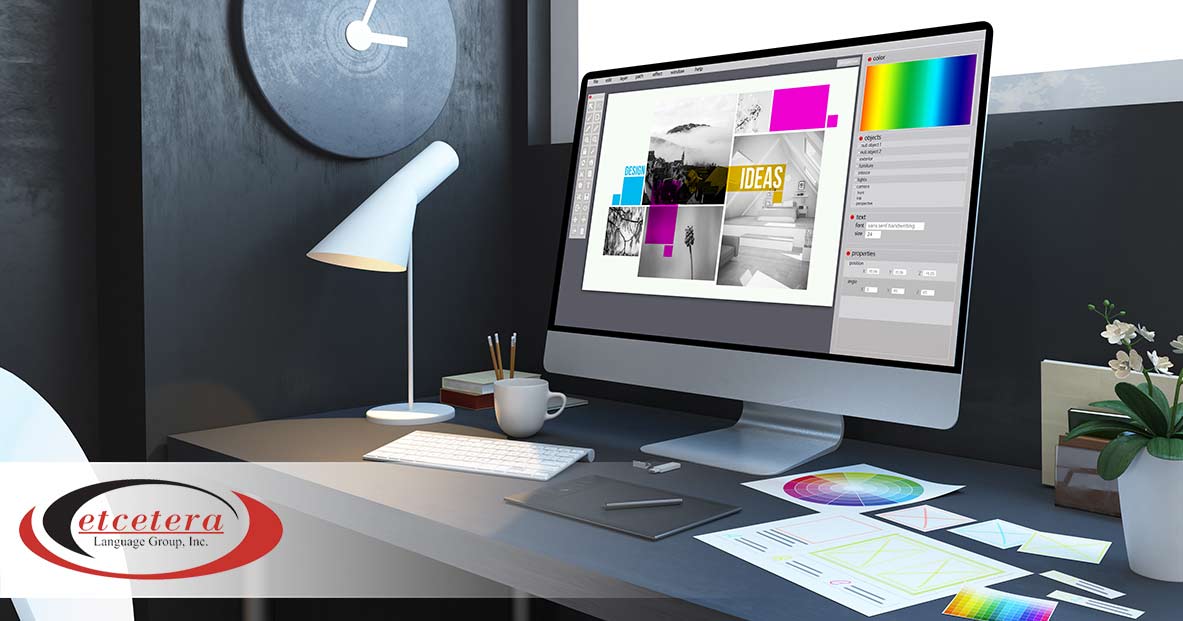
How Do Desktop Publishing Services Enhance Your Translations?
When it comes to global communication, accuracy in translation is only one part of the equation. The way your message is visually presented matters just as much. This is where desktop publishing services play a critical role. For businesses producing brochures, manuals, and marketing materials in multiple languages, desktop publishing (DTP) ensures that every translated document looks as polished and professional as the original. Through careful file preparation, the use of specialized software, and a deep understanding of multilingual layout challenges, DTP specialists recreate designs that preserve both linguistic precision and visual harmony.
By combining translation expertise with advanced design techniques, professional DTP teams deliver content that is ready to print or distribute across global markets without compromising on branding or readability.
Preparing Files for Multilingual Layouts
The DTP process begins long before translation starts. Proper file preparation is key to maintaining layout integrity and avoiding costly rework. When companies plan to translate materials into multiple languages, preparing the source files correctly saves time and ensures consistent results across all versions.
The first step is to organize and clean up the source file. All text elements should be editable and extracted from images whenever possible, as embedded text can’t be automatically translated or reformatted. Styles and paragraph formats should be used consistently so that translators and DTP specialists can apply formatting uniformly across languages. If a document has been created using a design platform such as Adobe InDesign, FrameMaker, or QuarkXPress, it’s important to package all associated files, including linked images and fonts.
Another best practice is to maintain a clear naming convention for file versions and assets. When working with multiple languages, each localized file must be tracked to avoid confusion during revisions. Including translation notes within the document or as a separate file can also help linguists and designers understand the intended tone and design hierarchy.
Finally, when exporting files for translation, choose exchange-friendly formats such as IDML (for InDesign) or MIF (for FrameMaker). These formats retain layout structure but allow text to be safely extracted and re-imported after translation. A well-prepared file streamlines the DTP process, reduces the risk of corrupted formatting, and helps ensure design consistency across languages.
Software Tools Used in Desktop Publishing
Modern desktop publishing relies on a suite of specialized software tools designed to manage complex layouts and multiple language scripts. The right tools allow DTP professionals to efficiently handle everything from Western alphabets to right-to-left and double-byte character sets such as Arabic, Hebrew, Chinese, and Japanese.
Industry-standard programs such as Adobe InDesign, Illustrator, and Photoshop are frequently used to prepare and finalize translated materials. InDesign is particularly well-suited for multilingual DTP because it offers advanced text control, styles, and compatibility with Unicode fonts. Adobe FrameMaker is another powerful tool, especially for long technical manuals that require precise formatting, cross-references, and conditional text options.
QuarkXPress and CorelDRAW remain popular in certain regions and industries, while Microsoft Publisher or Word may still be used for simpler corporate materials. In recent years, online collaborative platforms like Figma and Canva have gained traction for marketing teams, though they may have limitations in multilingual environments.
For translation compatibility, DTP teams often use Computer-Assisted Translation (CAT) tools such as SDL Trados Studio, memoQ, or Memsource. These programs can import DTP-friendly formats, preserving tags and layout information during translation. Once translation is complete, the DTP specialist imports the text back into the original design software, adjusts spacing and line breaks, and ensures everything fits visually within the page.
Automation tools also play a growing role in modern workflows. Scripting and plugins can speed up repetitive layout adjustments, font replacements, and file exports. However, human oversight remains essential, as language-specific typographic conventions require nuanced judgment that software cannot fully replicate.
Common Challenges in DTP for Translation
While DTP enhances the visual and professional quality of translated materials, it comes with its own set of challenges. Multilingual projects often involve significant variation in text length, script direction, and formatting conventions. Understanding these issues helps corporations anticipate what’s needed for a seamless workflow between translators and designers.
Handling Text Expansion in Different Languages
Text expansion is one of the most common hurdles in multilingual desktop publishing. When English content is translated into languages like German, Spanish, or Russian, the text can expand by 15 to 30 percent. Conversely, when translated into languages such as Chinese or Korean, the text may become shorter but denser.
DTP specialists address this by designing flexible layouts that can accommodate these variations. They may use adjustable text boxes, dynamic paragraph styles, and responsive grid systems to ensure visual balance regardless of language length. In marketing materials where space is limited, creative layout adjustments are often required, such as modifying line spacing, resizing images, or reflowing text around design elements.
Another important consideration is right-to-left languages like Arabic or Hebrew. These require complete mirroring of the layout to maintain logical flow and aesthetic balance. Professional DTP teams are trained to manage these directional shifts without compromising the overall design integrity.
Embedding Fonts and Managing Graphics
Typography plays a critical role in readability and brand presentation. Not all fonts support every language, which makes font selection a crucial step in multilingual design. DTP professionals must ensure that fonts are fully Unicode-compliant and include the necessary character sets for the target languages.
When a brand’s corporate font doesn’t support a specific script, the DTP specialist selects a visually compatible substitute. This choice requires both technical and aesthetic judgment to maintain a consistent brand identity across all languages.
Embedding fonts correctly is also vital for print and digital distribution. If fonts aren’t embedded, text may reflow or render incorrectly on other systems. For PDF and print outputs, all fonts should be embedded or converted to outlines as a final safeguard.
Graphics and images present another challenge. Some may include text that must be translated and reinserted into the image. This involves both linguistic accuracy and design skills, especially when adjusting kerning, alignment, and visual effects to match the original style. When dealing with layered image files like PSDs, maintaining organized layers and naming conventions simplifies the localization of visual content.
Final Proofing and Print-Ready Export
Once translation and layout adjustments are complete, the final proofing phase begins. This stage ensures that all visual and linguistic elements align perfectly before publishing. Proofing typically involves collaboration between the translator, the DTP specialist, and sometimes the client’s in-country reviewers.
Proofreaders check for text truncation, incorrect line breaks, misplaced punctuation, and any lingering formatting inconsistencies. Hyphenation and justification must be reviewed carefully since different languages have varying rules for word breaks. For example, French typography often requires non-breaking spaces before punctuation marks like colons or question marks.
Color consistency is another area that requires attention. DTP specialists confirm that color profiles (such as CMYK for print or RGB for digital) are properly applied and that linked images are in the correct resolution. Low-resolution graphics can compromise the final output, so all visual assets should meet professional print standards.
Finally, the document is exported in the format required by the client, whether that’s a print-ready PDF, an interactive digital publication, or a packaged file for future updates. The goal is to deliver a fully localized document that maintains the visual and structural quality of the original design while conveying the message accurately in every target language.
Why Professional DTP Services Matter
For global organizations, investing in professional desktop publishing services is not just about aesthetics. It directly impacts brand perception, readability, and communication effectiveness. A poorly formatted translation can create confusion, reduce engagement, and reflect poorly on the company’s professionalism. On the other hand, a well-executed multilingual layout reinforces credibility and enhances user experience across markets.
Professional DTP services also help companies reduce turnaround times and costs in the long run. By preparing source files correctly and maintaining consistent templates, businesses can streamline future updates and reprints across multiple languages. The collaboration between translators and DTP specialists ensures that each localized document meets both linguistic and visual standards without repeated revisions.
Industries such as manufacturing, healthcare, and technology rely heavily on technical manuals, product guides, and compliance documentation that must be accurately translated and formatted. Marketing departments, meanwhile, depend on multilingual brochures, advertisements, and catalogs to reach global audiences. In every case, DTP ensures that design integrity supports the clarity and authority of the translated message.
Partnering with the Right DTP and Translation Provider
Choosing the right partner for translation and desktop publishing is crucial to achieving professional, high-quality results. The provider must combine linguistic expertise with technical proficiency in a wide range of software and languages.
At Etcetera Language Group, Inc., we specialize in both document translation and desktop publishing services for businesses operating across international markets. Our multilingual DTP experts work seamlessly with translators to ensure every document is visually and linguistically flawless. Whether you need multilingual brochures, product catalogs, or technical manuals, our team manages every step, from file preparation and layout recreation to final proofing and print-ready delivery.
With decades of experience and a commitment to precision, Etcetera Language Group serves clients in diverse industries, offering translations in dozens of languages. Our professional approach guarantees consistency, accuracy, and global appeal for your business materials.
Ready to Elevate Your Multilingual Materials?
If your organization needs to communicate clearly and professionally across markets, partner with a trusted team that understands both language and design. Contact us to learn more about our translation and desktop publishing services. We help you reach the world with documents that speak clearly, look professional, and maintain the power of your brand, no matter the language.


Categorised in: Translation Services