
How Many Words in the English Language?
The English language is one of the most expansive in the world, and the numbers behind it are genuinely surprising. Whether you are a language enthusiast, a writer, or someone working with professional translation services, understanding just how large English’s vocabulary is puts a lot into perspective. For a deeper look at how English compares to other languages, see our companion post: Which Language Has the Most Words?
- Total OED entries: Over 600,000 words, including archaic and technical terms
- Words in active current use: Approximately 170,000
- Average active vocabulary: Around 20,000 words per adult speaker
- Average passive vocabulary: Around 40,000 words (words recognized but not regularly used)
- Words starting with X: Approximately 400 in the OED
- Words containing Z: Approximately 32,913
How Many Words Are in the English Language?
The answer depends on what you count. The Oxford English Dictionary (OED), the most comprehensive record of the English language, contains over 600,000 entries, including historical, archaic, and highly specialized technical terms. However, the number of words in active everyday use is considerably smaller. The Oxford Dictionary of Current English lists approximately 170,000 words that are actively used by English speakers today.
For comparison, Spanish and French each contain around 100,000 words in their standard dictionaries. Russian has over 200,000 and Italian around 270,000. These numbers vary depending on the dictionary used and how compound words and regional variations are counted.
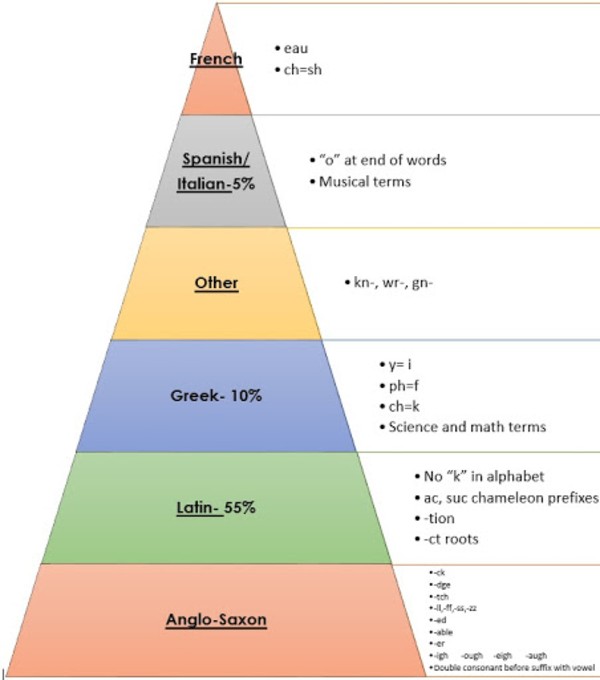
Part of what makes English’s vocabulary so large is its history of borrowing from other languages. English has absorbed words from Latin, French, Germanic, Norse, Greek, and dozens of other sources over centuries. This gives English an unusually large number of synonyms and near-synonyms, which is both an asset and a challenge for translators. When translating into English, there is usually a precise word for even fine distinctions. When translating out of English, those distinctions may not have a direct equivalent in the target language. For that reason, professional document translation relies on human expertise, not just vocabulary lookup.
How Many Words Does the Average Person Know?
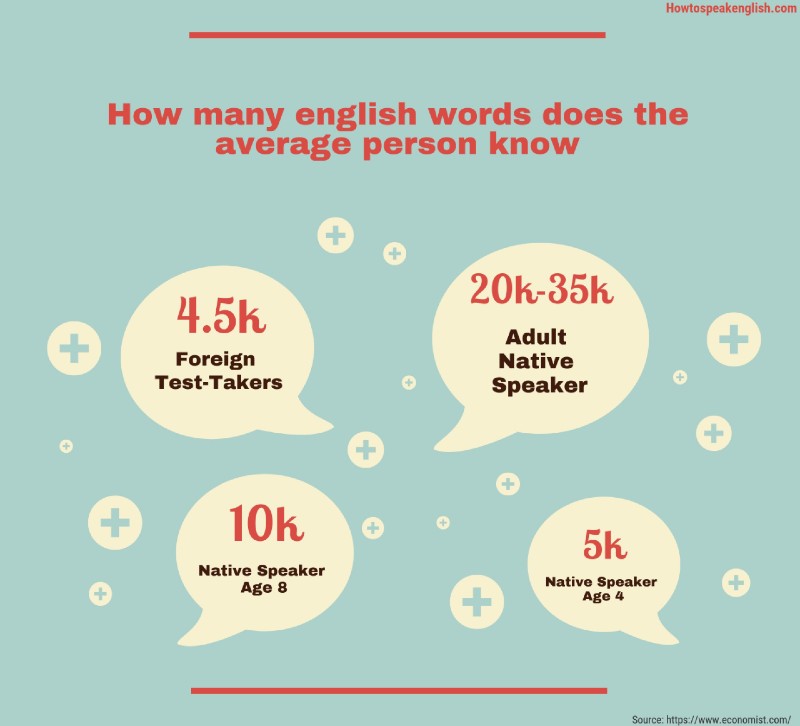
Most adult English speakers actively use around 20,000 words in everyday communication, though they may have a passive vocabulary of around twice that number. A passive vocabulary refers to words that a person recognizes and understands when reading or listening but does not use in their own speech or writing.
Interestingly, studies suggest that native speakers add roughly one new word to their vocabulary every two days throughout their adult lives, even after formal education ends. Native speakers of any language also typically use only a fraction of the total words available to them, relying on a core set of high-frequency words for the vast majority of everyday communication.
Why Does English Have So Many Words?
English’s unusually large vocabulary is largely the result of its history. English developed from Germanic roots but was profoundly shaped by the Norman French invasion of England in 1066, which introduced tens of thousands of French and Latin words. Later, the Renaissance brought another wave of Latin and Greek borrowings, and British colonialism spread English into contact with hundreds of other languages worldwide, each contributing new vocabulary.
This layered history means that English often has multiple words for the same concept, sometimes with subtle differences in register or connotation. The words “ask,” “inquire,” and “interrogate” all describe requesting information, but they carry very different tones. For translators, navigating these nuances accurately is one of the central challenges of the work. It is a key reason why human translators consistently outperform machine translation tools, particularly for legal, medical, and technical documents where word choice has real consequences.
How Many Words Start with X?
The letter X is one of the rarer starting letters in English. The Oxford Dictionary lists around 400 words beginning with X, though many general online dictionaries document closer to 120. A large proportion of X-initial words are proper nouns, scientific terms, or words borrowed directly from Greek, such as xenophobia (fear of strangers, from the Greek xenos) and xylophone (from the Greek xylon, meaning wood).
In other languages, X is far more common at the start of words. In Spanish, for example, many place names in Mexico and Central America begin with X, often reflecting indigenous Nahuatl or Mayan roots rather than Spanish. This is one reason why accurate Mexican Spanish translation benefits from translators familiar with regional vocabulary, not just standard Castilian Spanish.
How Many Words Contain Two Consecutive U’s?
Consecutive vowels are relatively common in English, but two consecutive U’s are a much rarer phenomenon. In most cases, words with double-U constructions have Latin roots. Among the most recognizable are:
- Vacuum
- Continuum
- Residuum
- Menstruum
- Triduum
- Duumvir
- Muumuu
The word muumuu is an interesting outlier. It comes from Hawaiian and refers to a loose-fitting traditional dress. It is a reminder that English continues to borrow and absorb words from other languages, and that the origins of everyday words are often far more varied than they appear. Hawaiian loanwords like muumuu, ukulele, and luau entered English through American usage and are now standard dictionary entries.
How Many Words End in -dous?
For crossword enthusiasts and Scrabble players, this is a useful one to know. There are only four words in common English use that end with the suffix -dous:
- Tremendous
- Horrendous
- Stupendous
- Hazardous
There is also the more obscure apodous, a zoological term referring to animals that lack feet in the traditional sense. You can now add it to your passive vocabulary. The -dous suffix derives from the Latin -osus, meaning full of or characterized by, the same root that gives English words like generous, nervous, and famous.
How Many Words Don’t Contain the Letter E?
E is the most frequently used letter in the English language, appearing in roughly 11% of all written text. Given that dominance, it might seem as though nearly every word contains an E. In fact, there are 243,744 English words that contain no E at all, ranging in length from two letters to 45.
That 45-letter word is Chargoggagoggmanchauggagoggchaubunagungamaugg, a Native American name for a lake in Massachusetts. It is often translated loosely as “you fish on your side, I fish on my side, nobody fishes in the middle.” The full name is a remarkable example of how place names in languages with long compound-word traditions can preserve entire descriptive phrases in a single term, presenting both a translation challenge and a fascinating window into how different languages encode meaning.
The scarcity of E in everyday writing is also relevant to translation. Because E is so dominant in English, its absence shifts the weight of other letters, which meaningfully affects how a passage reads and sounds. Writers and translators working on literary or creative texts must account for these rhythmic and phonetic qualities, not just semantic meaning.
How Many Words Contain the Letter Z?
Z may be the last letter in the alphabet, but it is not as rare as its placement might suggest. There are approximately 32,913 English words containing the letter Z. Many of these are loanwords from other languages, including Arabic (zero, zenith), Italian (pizza, mozzarella), and French (gazette, bizarre). The letter Z is also more prominent in American English spelling than in British English, where words like realize and organize are more commonly spelled with an S.
These spelling differences between American and British English are a practical consideration for translation projects. A document translated into English for a US audience should follow American spelling conventions, while one intended for a UK or Commonwealth audience should use British conventions. A qualified document translation service will specify and apply the correct regional variant consistently throughout.
English Translation Services
For over 20 years, clients have depended on Etcetera Language Group for accurate translation services to and from English, as well as over 60 other languages. Whether you need certified translations for official use, human translation for complex documents, or any other language service, our team is ready to help.
Call us at 202-547-2977 or use our contact form to get started.
Frequently Asked Questions
How many words are in the English language?
The Oxford English Dictionary contains over 600,000 entries in total, including archaic and highly specialized words. The number of words in active everyday use is smaller, at approximately 170,000. The difference reflects the fact that many OED entries are historical words no longer used in modern English, as well as thousands of highly technical scientific and legal terms used only by specialists.
How many words does the average English speaker know?
Most adult English speakers actively use around 20,000 words in everyday speech and writing. Their passive vocabulary, meaning words they recognize and understand but do not regularly use, is typically around 40,000 words. By comparison, the average adult adds roughly one new word to their vocabulary every two days throughout their lifetime.
Does English have more words than other languages?
English is generally considered to have one of the largest vocabularies of any language. Spanish and French each have around 100,000 dictionary entries, while Russian has over 200,000. English’s unusually large vocabulary is largely the result of its history of borrowing heavily from Latin, French, Germanic, Norse, and many other languages. For a detailed comparison, see our post on which language has the most words.
How many words in English start with X?
The Oxford Dictionary lists approximately 400 words beginning with X, though many general online dictionaries document closer to 120. A large proportion of X-initial English words are scientific or medical terms, or words borrowed directly from Greek, such as xenophobia and xylophone.
Why does English have so many synonyms?
English has a high number of synonyms because of its layered linguistic history. After the Norman Conquest of 1066, French and Latin words entered English alongside existing Germanic vocabulary, often creating parallel words for the same concept. For example, English has the Germanic “ask” alongside the French-derived “inquire” and the Latin-derived “interrogate.” These synonyms often carry different levels of formality or connotation, which is why experienced human translators are important for capturing the right tone in translated documents.
What is the longest English word without the letter E?
The longest recorded English word without the letter E is Chargoggagoggmanchauggagoggchaubunagungamaugg, a 45-letter Native American name for a lake in Massachusetts. It is sometimes translated as meaning “you fish on your side, I fish on my side, nobody fishes in the middle,” though the precise translation is debated.
Categorised in: Language Details